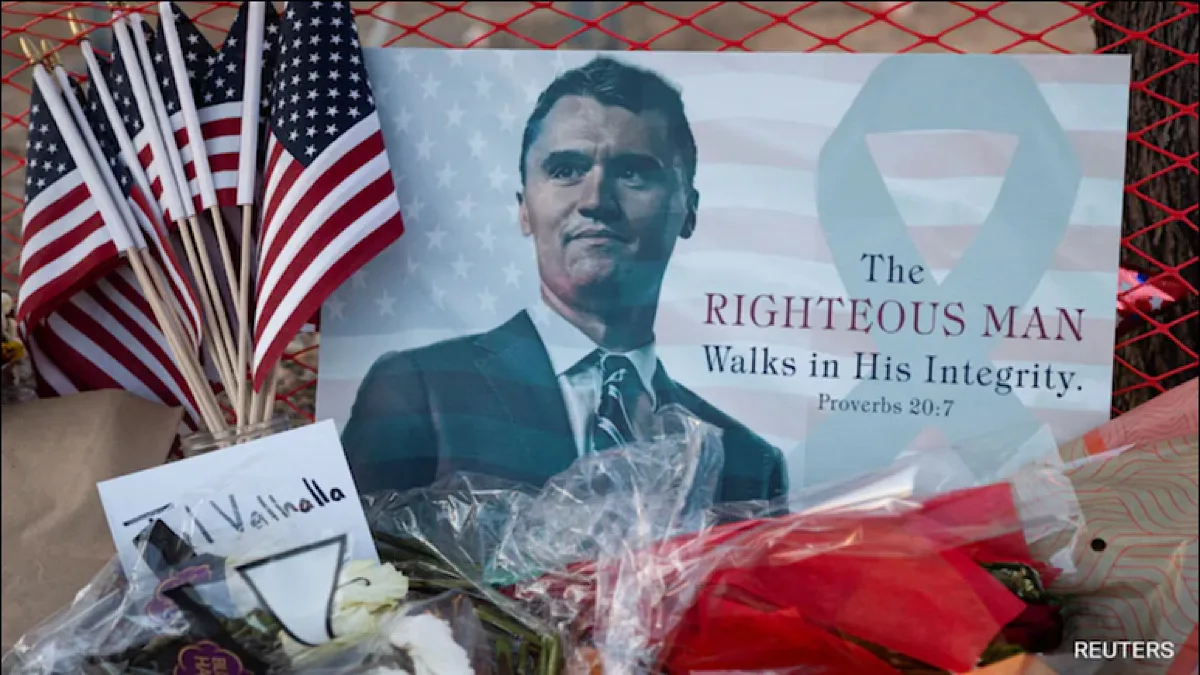
The memorial service for Charlie Kirk was intended to honour a young right-wing activist’s life, but it also revealed the combustible mix of politics, faith and identity shaping today’s United States. Tens of thousands filled a football stadium, waiting through the night for a seat, transforming a farewell into something closer to a revival meeting. Music from Christian performers, chants of national pride and a procession of high-ranking speakers fused grief with political theatre, creating an atmosphere both mournful and defiant.
Kirk’s death at just thirty-one is tragic in any context. He built a national following by challenging liberal orthodoxies on college campuses and urging young voters to embrace conservative ideas. His career was marked by a combative style and a gift for mobilising crowds, and his sudden killing has understandably shocked those who saw him as a generational leader. But the service went beyond remembrance. From the podium, senior political figures framed his death as an assassination, a sign of moral decay, and a call to arms for a movement that already commands significant influence in Washington. One of the most striking moments came when Kirk’s widow addressed the crowd. Speaking with remarkable composure, she forgave the alleged killer and called for a spiritual revival rather than revenge. Her words, rooted in Christian teaching, stood as a counterpoint to the harsher political rhetoric that followed.
Advertisement
It was a rare plea for mercy in a gathering otherwise charged with talk of enemies, strength and retribution. The service showed how personal sorrow can quickly become collective symbolism, turning an individual tragedy into a nationwide political reckoning. The decision to elevate Kirk as a martyr carries risks. Treating a still-unexplained killing as proof of ideological persecution deepens the narrative of a nation under siege. When leaders describe opponents as existential threats and use tragedy as fuel for political mobilisation, they narrow the space for dialogue and invite further confrontation. The danger is not only that violence may escalate, but that the basic norms of democratic coexistence may be eroded.
At the same time, the memorial captured an undeniable truth: Kirk’s movement has mastered the emotional language of belonging. By blending patriotic symbols, religious music, wooden crosses and youth-driven activism, it offers participants not just policies but identity. For many, that sense of purpose outweighs calls for restraint, making moderation an increasingly lonely position. America’s challenge is to mourn without weaponising grief. The power of forgiveness expressed on that stage offers a path toward reconciliation, but only if it is allowed to stand on its own rather than serve as a prelude to partisan battle. A society that treats every tragedy as political currency will find that its victories are fleeting and its wounds permanent. The real test now is whether compassion can outlast the applause lines ~ and whether grief can remain sacred in a time of relentless division.